
100 English Words With Urdu Meaning for Beginners
Quick answer: This is a list of 100 English words with Urdu meaning, plus simple example sentences and practice exercises, so beginners can build a strong base of everyday spoken English vocabulary.
Every fluent English speaker started in the same place: a small list of simple words used again and again. Words like home, water, friend, and eat show up in almost every conversation, long before anyone needs to learn complicated grammar rules.
If you are learning English as a second language in Pakistan, the fastest way to start speaking with confidence is the same. Build a solid list of everyday English words first, understand their Urdu meaning, and practice them in short sentences you can actually use.
This article gives you 100 of the most common English words used in daily life, each with its Urdu meaning and a simple example sentence. These are not difficult academic words — they are the words you will hear and use at home, at school, at work, and in the market.
Watch the Video Version of This Lesson
We have also shared a short video covering these same everyday words on our social media pages. The video is a quick way to hear the words spoken aloud and review them visually. Use the two together: watch the video for pronunciation practice, and come back to this article to study each word’s meaning, usage, and example sentence at your own pace. This written guide is meant to complement the video, not simply repeat it.
100 Common English Words With Urdu Meaning
Below is the full list of daily use English words, grouped into four easy sections. Each word includes its Urdu meaning and one example sentence in English with the Urdu translation next to it.
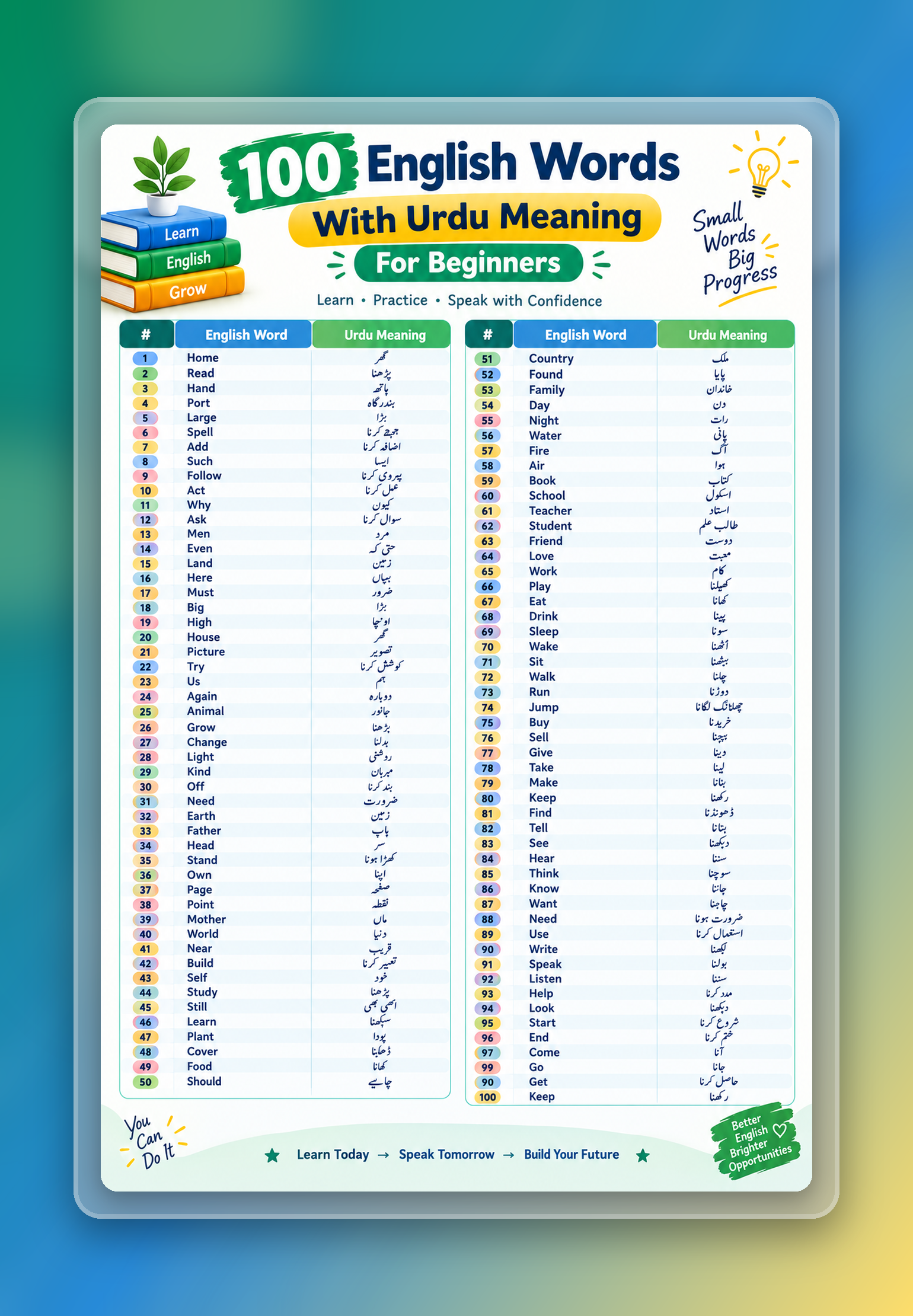
Words 1–25: Getting Started With Common Words
| # | English Word | Urdu Meaning | Example Sentence |
|---|---|---|---|
| 1 | Home | گھر | I go home after school. (میں سکول کے بعد گھر جاتا ہوں۔) |
| 2 | Read | پڑھنا | I read a book every night. (میں ہر رات ایک کتاب پڑھتا ہوں۔) |
| 3 | Hand | ہاتھ | Please give me your hand. (براہ کرم مجھے اپنا ہاتھ دیں۔) |
| 4 | Port | بندرگاہ | The ship arrived at the port. (جہاز بندرگاہ پر پہنچا۔) |
| 5 | Large | بڑا | She lives in a large house. (وہ ایک بڑے گھر میں رہتی ہے۔) |
| 6 | Spell | ہجے کرنا | Can you spell your name? (کیا آپ اپنا نام ہجے کر سکتے ہیں؟) |
| 7 | Add | اضافہ کرنا | In math class, we learn how to add numbers. (ریاضی کی کلاس میں ہم نمبروں میں اضافہ کرنا سیکھتے ہیں۔) |
| 8 | Such | ایسا | I have never seen such a big mountain. (میں نے کبھی ایسا بڑا پہاڑ نہیں دیکھا۔) |
| 9 | Follow | پیروی کرنا | Please follow the instructions carefully. (براہ کرم ہدایات کی احتیاط سے پیروی کریں۔) |
| 10 | Act | عمل کرنا | We must act quickly. (ہمیں فوری طور پر عمل کرنا چاہیے۔) |
| 11 | Why | کیوں | Why are you late today? (آج آپ کیوں دیر سے آئے؟) |
| 12 | Ask | سوال کرنا | You can ask me any question. (آپ مجھ سے کوئی بھی سوال پوچھ سکتے ہیں۔) |
| 13 | Men | مرد | Two men are standing outside. (دو مرد باہر کھڑے ہیں۔) |
| 14 | Even | حتی کہ | Even a child can understand this. (حتی کہ ایک بچہ بھی یہ سمجھ سکتا ہے۔) |
| 15 | Land | زمین | Farmers grow crops on this land. (کسان اس زمین پر فصلیں اگاتے ہیں۔) |
| 16 | Here | یہاں | Please come here. (براہ کرم یہاں آئیں۔) |
| 17 | Must | ضرور | You must finish your homework. (آپ کو اپنا ہوم ورک ضرور مکمل کرنا چاہیے۔) |
| 18 | Big | بڑا | That is a big problem. (یہ ایک بڑا مسئلہ ہے۔) |
| 19 | High | اونچا | The wall is very high. (دیوار بہت اونچی ہے۔) |
| 20 | House | گھر | They bought a new house. (انہوں نے ایک نیا گھر خریدا۔) |
| 21 | Picture | تصویر | She drew a beautiful picture. (اس نے ایک خوبصورت تصویر بنائی۔) |
| 22 | Try | کوشش کرنا | Please try your best. (براہ کرم اپنی پوری کوشش کریں۔) |
| 23 | Us | ہمیں | Come with us. (ہمارے ساتھ آئیں۔) |
| 24 | Again | دوبارہ | Please explain it again. (براہ کرم اسے دوبارہ سمجھائیں۔) |
| 25 | Animal | جانور | A dog is a friendly animal. (کتا ایک دوستانہ جانور ہے۔) |
Words 26–50: Family, Learning, and the World Around Us
| # | English Word | Urdu Meaning | Example Sentence |
|---|---|---|---|
| 26 | Grow | بڑھنا | Plants grow with water and sunlight. (پودے پانی اور دھوپ سے بڑھتے ہیں۔) |
| 27 | Change | بدلنا | You should change your habits. (آپ کو اپنی عادتیں بدلنی چاہئیں۔) |
| 28 | Light | روشنی | Please turn on the light. (براہ کرم روشنی جلائیں۔) |
| 29 | Kind | مہربان | She is a very kind person. (وہ بہت مہربان انسان ہے۔) |
| 30 | Off | بند | Please turn off the fan. (براہ کرم پنکھا بند کریں۔) |
| 31 | Need | ضرورت | There is no need to worry. (فکر کرنے کی کوئی ضرورت نہیں۔) |
| 32 | Earth | زمین | The Earth moves around the sun. (زمین سورج کے گرد گھومتی ہے۔) |
| 33 | Father | باپ | My father works in an office. (میرا باپ ایک دفتر میں کام کرتا ہے۔) |
| 34 | Head | سر | My head hurts a little. (میرا سر تھوڑا سا درد کر رہا ہے۔) |
| 35 | Stand | کھڑا ہونا | Please stand near the door. (براہ کرم دروازے کے قریب کھڑے ہو جائیں۔) |
| 36 | Own | اپنا | This is my own book. (یہ میری اپنی کتاب ہے۔) |
| 37 | Page | صفحہ | Turn to the next page. (اگلے صفحے پر جائیں۔) |
| 38 | Point | نقطہ | That is a good point. (یہ ایک اچھا نقطہ ہے۔) |
| 39 | Mother | ماں | My mother cooks very well. (میری ماں بہت اچھا کھانا پکاتی ہے۔) |
| 40 | World | دنیا | She wants to travel the world. (وہ دنیا کی سیر کرنا چاہتی ہے۔) |
| 41 | Near | قریب | The shop is near my house. (دکان میرے گھر کے قریب ہے۔) |
| 42 | Build | تعمیر کرنا | They plan to build a new school. (وہ ایک نیا سکول تعمیر کرنے کا ارادہ رکھتے ہیں۔) |
| 43 | Self | خود | Self-confidence helps you succeed. (خود اعتمادی آپ کو کامیاب ہونے میں مدد دیتی ہے۔) |
| 44 | Study | پڑھنا | I study English every day. (میں ہر روز انگریزی پڑھتا ہوں۔) |
| 45 | Still | ابھی بھی | He is still sleeping. (وہ ابھی بھی سو رہا ہے۔) |
| 46 | Learn | سیکھنا | Children learn quickly. (بچے جلدی سیکھتے ہیں۔) |
| 47 | Plant | پودا | Water this plant every day. (اس پودے کو ہر روز پانی دیں۔) |
| 48 | Cover | ڈھانپنا | Cover the food before you leave. (جانے سے پہلے کھانے کو ڈھانپ دیں۔) |
| 49 | Food | غذا | Fresh food is good for health. (تازہ غذا صحت کے لیے اچھی ہوتی ہے۔) |
| 50 | Should | چاہیے | You should sleep early. (آپ کو جلدی سونا چاہیے۔) |
Words 51–75: School, Nature, and Daily Routine
| # | English Word | Urdu Meaning | Example Sentence |
|---|---|---|---|
| 51 | Country | ملک | Pakistan is a beautiful country. (پاکستان ایک خوبصورت ملک ہے۔) |
| 52 | Found | پانا | I found my keys under the bed. (مجھے میری چابیاں بستر کے نیچے ملیں۔) |
| 53 | Family | خاندان | I love spending time with my family. (مجھے اپنے خاندان کے ساتھ وقت گزارنا پسند ہے۔) |
| 54 | Day | دن | Today is a beautiful day. (آج ایک خوبصورت دن ہے۔) |
| 55 | Night | رات | We watched the stars at night. (ہم نے رات کو ستارے دیکھے۔) |
| 56 | Water | پانی | Drink enough water every day. (ہر روز کافی پانی پیئیں۔) |
| 57 | Fire | آگ | The fire kept us warm. (آگ نے ہمیں گرم رکھا۔) |
| 58 | Air | ہوا | The morning air feels fresh. (صبح کی ہوا تازہ محسوس ہوتی ہے۔) |
| 59 | Book | کتاب | This book is very interesting. (یہ کتاب بہت دلچسپ ہے۔) |
| 60 | School | سکول | My children go to school every day. (میرے بچے ہر روز سکول جاتے ہیں۔) |
| 61 | Teacher | استاد | Our teacher explains things clearly. (ہمارے استاد چیزیں واضح طور پر سمجھاتے ہیں۔) |
| 62 | Student | طالب علم | She is a hardworking student. (وہ ایک محنتی طالب علم ہے۔) |
| 63 | Friend | دوست | He is my best friend. (وہ میرا سب سے اچھا دوست ہے۔) |
| 64 | Love | محبت | A mother’s love is unconditional. (ماں کی محبت غیر مشروط ہوتی ہے۔) |
| 65 | Work | کام | I have a lot of work today. (آج میرے پاس بہت کام ہے۔) |
| 66 | Play | کھیلنا | Children love to play outside. (بچوں کو باہر کھیلنا پسند ہے۔) |
| 67 | Eat | کھانا | We eat dinner together every night. (ہم ہر رات مل کر رات کا کھانا کھاتے ہیں۔) |
| 68 | Drink | پینا | Please drink your milk. (براہ کرم اپنا دودھ پیئیں۔) |
| 69 | Sleep | سونا | Babies sleep a lot. (چھوٹے بچے بہت سوتے ہیں۔) |
| 70 | Wake | اٹھنا | I wake up early every morning. (میں ہر صبح جلدی اٹھتا ہوں۔) |
| 71 | Sit | بیٹھنا | Please sit down here. (براہ کرم یہاں بیٹھ جائیں۔) |
| 72 | Walk | چلنا | We walk to the market together. (ہم اکٹھے بازار تک چلتے ہیں۔) |
| 73 | Run | دوڑنا | The children run in the park. (بچے پارک میں دوڑتے ہیں۔) |
| 74 | Jump | چھلانگ لگانا | The dog can jump very high. (کتا بہت اونچی چھلانگ لگا سکتا ہے۔) |
| 75 | Buy | خریدنا | I want to buy new shoes. (میں نئے جوتے خریدنا چاہتا ہوں۔) |
Words 76–100: Action Words for Everyday Conversation
| # | English Word | Urdu Meaning | Example Sentence |
|---|---|---|---|
| 76 | Sell | بیچنا | He sells vegetables in the market. (وہ بازار میں سبزیاں بیچتا ہے۔) |
| 77 | Give | دینا | Please give me your pen. (براہ کرم مجھے اپنا قلم دیں۔) |
| 78 | Take | لینا | Take this umbrella with you. (یہ چھتری اپنے ساتھ لے جائیں۔) |
| 79 | Make | بنانا | My mother can make delicious food. (میری ماں لذیذ کھانا بنا سکتی ہے۔) |
| 80 | Keep | رکھنا | Keep this book safe. (اس کتاب کو محفوظ رکھیں۔) |
| 81 | Find | ڈھونڈنا | Can you help me find my phone? (کیا آپ میرا فون ڈھونڈنے میں میری مدد کر سکتے ہیں؟) |
| 82 | Tell | بتانا | Please tell me the truth. (براہ کرم مجھے سچ بتائیں۔) |
| 83 | See | دیکھنا | I can see the mountains from here. (میں یہاں سے پہاڑ دیکھ سکتا ہوں۔) |
| 84 | Hear | سننا | I can hear music outside. (میں باہر موسیقی سن سکتا ہوں۔) |
| 85 | Think | سوچنا | I think this is a good idea. (میرا خیال ہے کہ یہ ایک اچھا خیال ہے۔) |
| 86 | Know | جاننا | Do you know his name? (کیا آپ اس کا نام جانتے ہیں؟) |
| 87 | Want | چاہنا | I want a cup of tea. (میں ایک کپ چائے چاہتا ہوں۔) |
| 88 | Need | ضرورت ہونا | I need your help right now. (مجھے ابھی آپ کی مدد کی ضرورت ہے۔) |
| 89 | Use | استعمال کرنا | You can use my phone. (آپ میرا فون استعمال کر سکتے ہیں۔) |
| 90 | Write | لکھنا | Please write your name here. (براہ کرم یہاں اپنا نام لکھیں۔) |
| 91 | Speak | بولنا | She can speak three languages. (وہ تین زبانیں بول سکتی ہے۔) |
| 92 | Listen | سننا | Please listen carefully. (براہ کرم غور سے سنیں۔) |
| 93 | Help | مدد کرنا | Can you help me with this bag? (کیا آپ اس بیگ میں میری مدد کر سکتے ہیں؟) |
| 94 | Look | دیکھنا | Look at the beautiful sunset. (اس خوبصورت غروب آفتاب کو دیکھیں۔) |
| 95 | Start | شروع کرنا | Let’s start the class. (چلیں کلاس شروع کریں۔) |
| 96 | End | ختم کرنا | We will end the meeting soon. (ہم جلد ہی میٹنگ ختم کریں گے۔) |
| 97 | Come | آنا | Please come to my house tomorrow. (براہ کرم کل میرے گھر آئیں۔) |
| 98 | Go | جانا | I go to the market every evening. (میں ہر شام بازار جاتا ہوں۔) |
| 99 | Get | حاصل کرنا | I want to get good marks. (میں اچھے نمبر حاصل کرنا چاہتا ہوں۔) |
| 100 | Keep | رکھنا | Always keep your room clean. (اپنے کمرے کو ہمیشہ صاف رکھیں۔) |
Important English Word Differences You Should Know
A few words on this list look close in Urdu but are used differently in English. Knowing these small differences will make your English sound more natural.
- Home vs. House — House is the building itself. Home is the feeling of comfort, family, and belonging. (گھر کی عمارت House ہے، جبکہ Home سے مراد اپناپن اور سکون کا احساس ہے۔)
- Land vs. Earth — Land usually means a piece of ground or property. Earth refers to the whole planet we live on. (Land زمین کے ایک ٹکڑے کو کہتے ہیں، جبکہ Earth پوری زمین یعنی سیارے کو کہا جاتا ہے۔)
- See vs. Look — See means something naturally enters your view. Look means you turn your attention toward something on purpose. (See کا مطلب ہے کچھ خودبخود نظر آنا، جبکہ Look کا مطلب ہے جان بوجھ کر کسی چیز کی طرف دیکھنا۔)
- Hear vs. Listen — Hear means a sound reaches your ears without effort. Listen means you are paying attention on purpose. (Hear کا مطلب ہے آواز خودبخود کان تک پہنچنا، جبکہ Listen کا مطلب ہے دھیان سے سننا۔)
- Read vs. Study — Read means going through written words. Study means reading with focus in order to learn something. (Read کا مطلب صرف پڑھنا ہے، جبکہ Study کا مطلب توجہ سے پڑھ کر سیکھنا ہے۔)
- Need as a noun vs. a verb — As a noun, need means a requirement, like “There is no need to worry.” As a verb, need means to require something, like “I need your help.” (Need بطور اسم ضرورت کے معنی میں آتا ہے، اور بطور فعل کسی چیز کی ضرورت ہونے کے معنی میں آتا ہے۔)
How to Use These Words in Daily English
Knowing the Urdu meaning of a word is only the first step. To actually use these words in conversation, try the following:
- Say each example sentence out loud. Reading silently helps, but speaking trains your mouth and memory together.
- Use one new word in a real sentence every day. Pick a word from today’s list and try to use it while talking to family or friends.
- Group similar words together. Pairs like See and Look, or Hear and Listen, are easier to remember when learned side by side.
- Talk about familiar, everyday topics. Describe your home, your family, your school, or your daily routine using these words. Small, familiar topics are easier to speak about than big or abstract ones.
- Practice speaking regularly, not just reading. If you want structured daily speaking practice with a teacher, our free spoken English course is built for Urdu-speaking beginners who want real speaking confidence, one lesson at a time.
If you would also like a printable Urdu-English word list for offline revision, you can check this vocabulary list on Scribd as an extra reference.
Practice What You Learned
Test yourself with the exercises below. Try to answer without looking at the list first, then check your answers at the end.
Fill in the Blanks
Word box: Listen, Water, Walk, Teacher, Sleep, Start, Buy, Family
- I always ______ carefully when my teacher explains a new topic.
- Please drink this glass of ______ before you leave.
- Every evening, we ______ together to the park near our home.
- My ______ is very kind and helps me understand difficult lessons.
- Children need to ______ eight hours every night to stay healthy.
- We should ______ the meeting on time.
- I want to ______ a new pair of shoes this weekend.
- Spending time with my ______ makes me happy.
Multiple Choice Questions
- Which word means “دوست” in English? a) Teacher b) Friend c) Student d) Father
- Choose the correct word: “Please ______ carefully to the instructions.” a) See b) Look c) Listen d) Speak
- What is the Urdu meaning of “Water”? a) ہوا b) آگ c) پانی d) زمین
- Choose the correct word: “I ______ to school every day.” a) Go b) Come c) Take d) Give
- Which word means “بڑا” in English? a) Small b) Large c) Near d) High
- Choose the correct word: “We ______ our dinner together every night.” a) Drink b) Sleep c) Eat d) Sell
- What is the Urdu meaning of “Teacher”? a) طالب علم b) استاد c) دوست d) خاندان
- Choose the correct word: “Can you help me ______ my phone?” a) Find b) Keep c) Give d) Buy
Urdu to English Translation Practice
Translate these short Urdu sentences into English.
- میں ہر روز پانی پیتا ہوں۔
- وہ ایک اچھا استاد ہے۔
- براہ کرم لائٹ بند کریں۔
- میرا خاندان بہت بڑا ہے۔
- بچے پارک میں کھیلتے ہیں۔
- کیا آپ مجھے اپنا نام بتا سکتے ہیں؟
- مجھے آپ کی مدد کی ضرورت ہے۔
- وہ صبح جلدی اٹھتا ہے۔
Answer Key
Fill in the Blanks: 1. Listen 2. Water 3. Walk 4. Teacher 5. Sleep 6. Start 7. Buy 8. Family
Multiple Choice: 1. b) Friend 2. c) Listen 3. c) پانی 4. a) Go 5. b) Large 6. c) Eat 7. b) استاد 8. a) Find
Translation Practice:
- I drink water every day.
- He is a good teacher.
- Please turn off the light.
- My family is very large.
- The children play in the park.
- Can you tell me your name?
- I need your help.
- He wakes up early in the morning.
Frequently Asked Questions
What are the most common English words used in daily life? Words like home, water, family, friend, eat, and go are among the most common English words used in everyday conversation. This article lists 100 such words with Urdu meanings and example sentences.
How can Urdu speakers learn English vocabulary faster? Learning a word together with its Urdu meaning and a short example sentence, instead of memorizing the word alone, helps you understand how and when to actually use it.
What is the difference between “Home” and “House”? “House” refers to the physical building. “Home” refers to the feeling of comfort, family, and belonging, even though the two words are often translated the same way in Urdu.
Do I need to learn grammar before learning vocabulary? No. Beginners can start with common words and simple sentences first. Grammar becomes easier to understand once you already know the words being used in a sentence.
How many English words should a beginner know to speak basic English? Around 300 to 500 of the most common English words are usually enough for basic daily conversation. This list of 100 words is a strong starting point for beginners in Pakistan.
Is there a free way to learn spoken English in Pakistan? Yes. Free resources such as guided spoken English courses and vocabulary lessons are available for Urdu-speaking learners who want to improve their English without any cost.
Where can I watch a video lesson for these same words? A short video covering these same 100 words is available on our social media pages, useful for practicing pronunciation alongside this written lesson.
Final Thoughts
These 100 words are not meant to be memorized in one sitting. Go through a few words each day, say the example sentences out loud, and try to use at least one new word in your real conversations. Small, consistent practice builds English speaking vocabulary far better than trying to learn everything at once.
If you want to keep growing your word bank with more themed lists, visit our English vocabulary with Urdu meanings page for more lessons like this one.