You use shopping words almost every day. When you go to a store, bargain with a shopkeeper, or complain that something is too expensive, you’re already using shopping vocabulary — just maybe not in English yet.
Shopping vocabulary is one of the most practical parts of the English language because you can use it immediately in real life. You don’t need a classroom to practice it. The next time you visit a market, a mall, or even an online store, you can try out these words in real conversation.
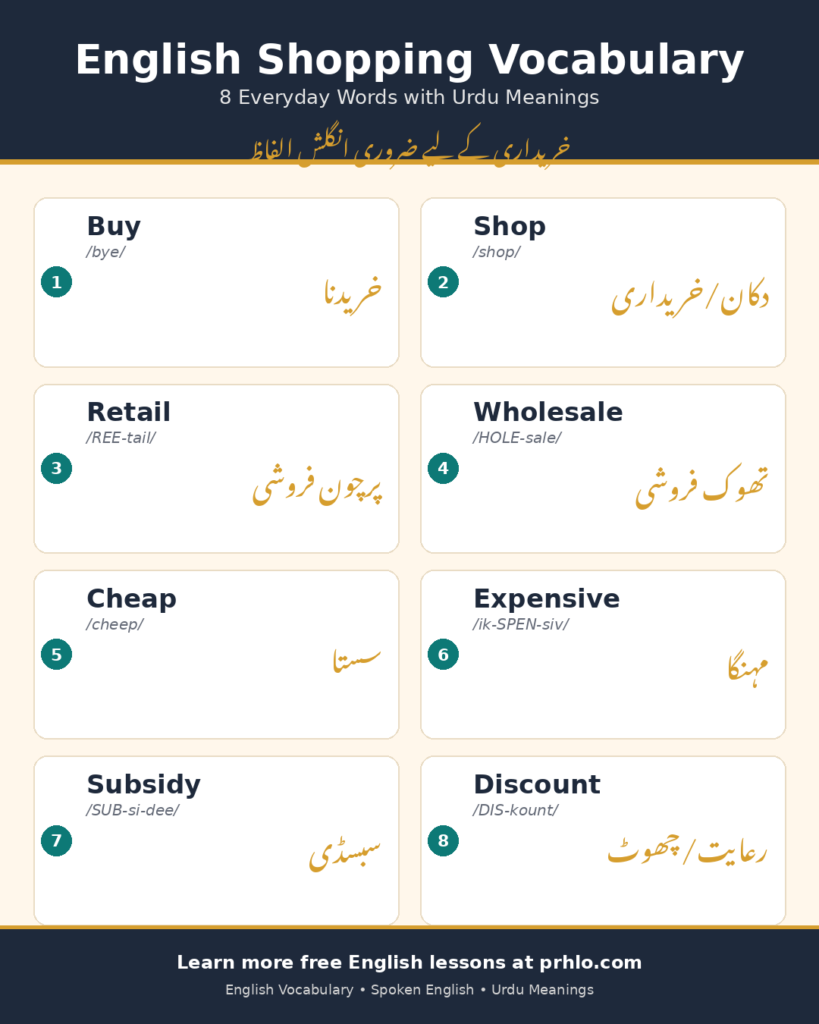
In this post, we’ll cover 8 useful English shopping words — the same ones covered in our short video lesson — with simple Urdu meanings, easy pronunciation, real example sentences, and a short practice conversation so you can actually use them, not just recognize them.
The 8 Shopping Words You Need to Know
Each word below includes its pronunciation, Urdu meaning, a simple definition, example sentences with Urdu translation, and a short note on how it’s actually used in daily life.
1. Buy
Pronunciation: bye (rhymes with “sky”)
Urdu Meaning: خریدنا
Simple Definition: To get something by paying money for it.
Example Sentences:
1. I want to buy a new phone this month.
میں اس مہینے نیا فون خریدنا چاہتا ہوں۔
2. She buys vegetables from the local market every Friday.
وہ ہر جمعہ کو مقامی بازار سے سبزیاں خریدتی ہے۔
3. We didn’t buy anything because the shop was closed.
ہم نے کچھ نہیں خریدا کیونکہ دکان بند تھی۔
Real-Life Use: “Buy” is a verb, and it’s one of the first words learners use when talking about shopping. You’ll hear it everywhere — “I need to buy groceries,” “Did you buy that shirt?” — so it’s worth mastering early.
2. Shop
Pronunciation: shop (short “o” sound, like “stop”)
Urdu Meaning: دکان (noun) / خریداری کرنا (verb)
Simple Definition: As a noun, a shop is a place where goods are sold. As a verb, “to shop” means to visit stores to look at or buy things.
Example Sentences:
1. There is a small shop near my house that sells snacks.
میرے گھر کے قریب ایک چھوٹی دکان ہے جہاں ناشتے کی چیزیں ملتی ہیں۔
2. I like to shop for clothes during Eid sales.
مجھے عید کی سیل کے دوران کپڑوں کی خریداری کرنا پسند ہے۔
3. We went shopping together last weekend.
ہم پچھلے ہفتے اکٹھے خریداری کرنے گئے تھے۔
Real-Life Use: Notice that “shop” can be both a place (noun) and an action (verb). This is a common pattern in English, and it’s important to understand it early so you don’t get confused when you see the same word used two different ways.
3. Retail
Pronunciation: REE-tail
Urdu Meaning: پرچون فروشی
Simple Definition: The business of selling goods directly to customers, usually in small amounts, through shops or stores.
Example Sentences:
1. This store sells clothes at retail price.
یہ دکان کپڑے پرچون قیمت پر بیچتی ہے۔
2. He works in the retail business, managing a clothing shop.
وہ پرچون کے کاروبار میں کام کرتا ہے اور ایک کپڑوں کی دکان چلاتا ہے۔
3. Retail prices are usually higher than wholesale prices.
پرچون کی قیمتیں عام طور پر تھوک کی قیمتوں سے زیادہ ہوتی ہیں۔
Real-Life Use: You’ll often see “retail price” written on price tags or bills. It simply means the price a normal customer pays in a shop, as opposed to the price a shop owner pays when buying in bulk.
4. Wholesale
Pronunciation: HOLE-sale
Urdu Meaning: تھوک فروشی
Simple Definition: Selling goods in large quantities at lower prices, usually to shop owners rather than directly to the public.
Example Sentences:
1. My uncle buys rice at wholesale rates and sells it in his shop.
میرے چچا تھوک ریٹ پر چاول خریدتے ہیں اور اپنی دکان میں بیچتے ہیں۔
2. This is a wholesale market, so prices are much lower here.
یہ تھوک بازار ہے، اس لیے یہاں قیمتیں کافی کم ہیں۔
3. You can save money by buying school supplies wholesale.
اسکول کا سامان تھوک میں خرید کر آپ پیسے بچا سکتے ہیں۔
Real-Life Use: In Pakistani cities, you’ll often hear “thok bazaar” — that’s exactly what “wholesale market” means in English. Shopkeepers buy from wholesale markets and then sell at retail prices to earn a profit.
5. Cheap
Pronunciation: cheep (like the sound a bird makes)
Urdu Meaning: سستا
Simple Definition: Low in price; not costing much money.
Example Sentences:
1. This mobile cover is very cheap, only 200 rupees.
یہ موبائل کور بہت سستا ہے، صرف دو سو روپے۔
2. I found a cheap and good restaurant near my office.
مجھے اپنے دفتر کے قریب ایک سستا اور اچھا ریستوران ملا۔
3. Cheap products are not always low quality.
سستی چیزیں ہمیشہ کم معیار کی نہیں ہوتیں۔
Real-Life Use: Be careful — “cheap” can also mean “low quality” in some situations, not just “low price.” For example, “This bag looks cheap” can sound like an insult. When you simply mean low price in a positive way, “affordable” is a safer word to use.
6. Expensive
Pronunciation: ik-SPEN-siv
Urdu Meaning: مہنگا
Simple Definition: Costing a lot of money.
Example Sentences:
1. That watch is too expensive for me.
وہ گھڑی میرے لیے بہت مہنگی ہے۔
2. Branded shoes are usually more expensive than local ones.
برانڈڈ جوتے عام طور پر مقامی جوتوں سے زیادہ مہنگے ہوتے ہیں۔
3. Why is petrol so expensive these days?
آج کل پیٹرول اتنا مہنگا کیوں ہے؟
Real-Life Use: “Expensive” is the opposite of “cheap.” Both words are extremely common in daily conversations, bargaining, and complaints about prices — something every shopper can relate to.
7. Subsidy
Pronunciation: SUB-si-dee
Urdu Meaning: سبسڈی / حکومتی امداد
Simple Definition: Money given by a government or organization to lower the price of a product or service for the public.
Example Sentences:
1. The government gives a subsidy on wheat flour every year.
حکومت ہر سال آٹے پر سبسڈی دیتی ہے۔
2. Farmers receive a subsidy to buy fertilizer at a lower price.
کسانوں کو کھاد کم قیمت پر خریدنے کے لیے سبسڈی ملتی ہے۔
3. Without a subsidy, gas prices would be much higher.
سبسڈی کے بغیر گیس کی قیمتیں بہت زیادہ ہوتیں۔
Real-Life Use: “Subsidy” is common in news and economic discussions, especially about food, fuel, and utility prices. If you read Pakistani newspapers or watch the news in English, this word appears often.
8. Discount
Pronunciation: DIS-kount (as a noun); dis-KOUNT (as a verb)
Urdu Meaning: رعایت / چھوٹ
Simple Definition: A reduction in the normal price of something.
Example Sentences:
1. The shop is offering a 20% discount on winter clothes.
دکان سردیوں کے کپڑوں پر بیس فیصد رعایت دے رہی ہے۔
2. Can you give me a discount if I buy two shirts?
اگر میں دو قمیضیں خریدوں تو کیا آپ رعایت دیں گے؟
3. I always wait for the Eid discount before buying new clothes.
میں نئے کپڑے خریدنے سے پہلے ہمیشہ عید کی رعایت کا انتظار کرتا ہوں۔
Real-Life Use: “Discount” is a shop-offered price reduction — often for a sale or festival — while “subsidy” is a government-given price reduction. Keep reading below for a clearer comparison.
Important Differences to Remember
Learners often confuse a few of these words. Here’s a quick, clear comparison.
Retail vs. Wholesale: Retail means selling small quantities directly to regular customers, usually at a higher price. Wholesale means selling large quantities, usually to other shop owners, at a lower price. A shopkeeper buys wholesale and sells retail.
Discount vs. Subsidy: A discount is offered by a shop or business, usually for a limited time, to attract customers. A subsidy is given by the government to make everyday products more affordable for the general public. Both reduce the price, but the source is different — a business gives a discount, and a government gives a subsidy.
Buy vs. Shop: “Buy” always means completing a purchase — you pay money and take the item. “Shop” (as a verb) means looking around or visiting stores, which may or may not end in buying something. You can shop without buying, but you cannot buy without paying.
How to Use These Shopping Words in Daily English
Learning words in isolation isn’t enough — you need to see how they connect in real conversation. Here’s a short, realistic dialogue between a customer and a shopkeeper using several of the words above.
Customer: Excuse me, how much is this jacket?
Shopkeeper: It’s 3,500 rupees. It’s a good quality jacket.
Customer: That’s quite expensive. Do you have anything cheap?
Shopkeeper: Yes, we have a smaller collection at 1,200 rupees. Also, if you shop today, we’re giving a 15% discount on all jackets.
Customer: That sounds better. Do you buy your stock from a wholesale market?
Shopkeeper: Yes, we buy wholesale from the city market and sell at a fair retail price here.
Customer: Great, I’ll buy this one with the discount, please.
Reading conversations like this one out loud is a simple way to practice pronunciation and sentence flow at the same time. If you’d like more real conversations like this, our free spoken English language course covers everyday speaking situations exactly like the one above.
Practice Exercises
Try these on your own before checking the answers below.
A. Fill in the Blanks
- This shop offers a 10%
__________on all shoes this week. - I never
__________anything without checking the price first. - Farmers get a government
__________on seeds every season. - This mobile phone is too
__________; I can’t afford it. - He owns a small
__________shop in the local market.
B. Multiple Choice Questions
Which word means “low in price”?
a) Expensive b) Cheap c) Wholesale d) SubsidyWhat do we call money given by the government to lower prices?
a) Discount b) Retail c) Subsidy d) ShopBuying goods in large quantities at a lower price is called:
a) Retail b) Wholesale c) Discount d) Buy“I want to
__________a new bag” — which word fits best?
a) Shop b) Buy c) Expensive d) SubsidyA reduction in price offered by a shop during a sale is called a:
a) Subsidy b) Wholesale c) Discount d) Retail
C. Urdu to English Translation
Translate these sentences into English using the words you learned.
- یہ قمیض بہت مہنگی ہے۔
- کیا آپ مجھے رعایت دیں گے؟
- میں کل بازار میں خریداری کرنے جاؤں گا۔
- حکومت چینی پر سبسڈی دیتی ہے۔
- یہ دکان تھوک اور پرچون دونوں طرح سامان بیچتی ہے۔
Answer Key
A. Fill in the Blanks: 1. discount 2. buy 3. subsidy 4. expensive 5. retail
B. Multiple Choice Questions: 1. b) Cheap 2. c) Subsidy 3. b) Wholesale 4. b) Buy 5. c) Discount
C. Translation (sample answers):
1. This shirt is very expensive.
2. Will you give me a discount?
3. I will go shopping in the market tomorrow.
4. The government gives a subsidy on sugar.
5. This shop sells goods both wholesale and retail.
Learn More English Vocabulary with Urdu Meanings
Shopping words are just one small part of everyday English. If you want to keep building your vocabulary with the same simple style — English word, Urdu meaning, and real examples — visit our full English vocabulary with Urdu meanings collection for more beginner-friendly word lists.
We also made a short video covering these same 8 words, which you can watch as a quick visual recap alongside this article:
If you’re checking any word’s meaning further, a trusted resource like the Cambridge Dictionary is also useful for double-checking definitions and pronunciation.
Frequently Asked Questions
1. What are some common English words used in shopping?
Some of the most common English shopping words are buy, shop, retail, wholesale, cheap, expensive, subsidy, and discount. These words appear in daily conversations, price tags, and news reports about the economy.
2. What is the difference between retail and wholesale?
Retail means selling small quantities directly to customers, usually at a higher price. Wholesale means selling large quantities, usually to shop owners, at a lower price.
3. What is the difference between a discount and a subsidy?
A discount is a temporary price reduction offered by a shop or business, often during a sale. A subsidy is a price reduction supported by the government to make essential goods more affordable for everyone.
4. Is “cheap” a polite word to use while shopping?
“Cheap” simply means low in price, but it can sometimes suggest low quality if used to describe a product’s appearance or material. If you want to describe a fair, low price in a positive way, “affordable” is often a safer choice.
5. How can beginners remember new English vocabulary easily?
Learning a word with its Urdu meaning, a simple English definition, and 2–3 example sentences — the same method used in this article — helps beginners remember words faster because they see the word in real context, not just as a translation.
6. Where can I practice using these shopping words in conversation?
You can practice with the sample conversation in this article, or join our free spoken English language course for more everyday speaking practice.
7. Is watching a short video enough to learn these words?
A short video is great for quick revision and pronunciation, but reading a detailed explanation with examples — like this article — helps you understand how each word is actually used, which is harder to explain in a 30-second video.