Learning English can often feel overwhelming, especially when tackling the endless list of verb forms. However, mastering the 1st Form (Present), 2nd Form (Past), and 3rd Form (Past Participle) is the backbone of fluent speaking and writing.
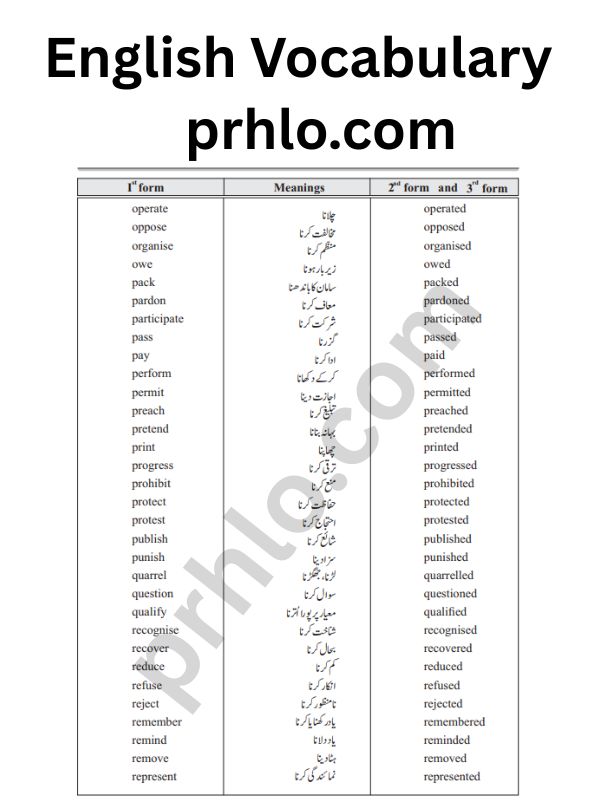
Today, we are breaking down a powerful vocabulary chart originally shared by prhlo.com. This list contains 50 high-frequency verbs that every student, especially Urdu speakers, needs to know.
Let’s dive into the table. Below, you will find the verb, its Urdu translation, and the transformation into the 2nd and 3rd forms.
Complete Verb Table (Form 1, 2, 3 with Urdu Meanings)
| 1st Form (Present) | Urdu Meaning | 2nd & 3rd Form (Past) |
|---|---|---|
| Operate | چلانا | Operated |
| Oppose | مخالفت کرنا | Opposed |
| Organise | منظم کرنا | Organised |
| Owe | مقروض ہونا | Owed |
| Pack | باندھنا / پیک کرنا | Packed |
| Pardon | معاف کرنا | Pardoned |
| Participate | شرکت کرنا | Participated |
| Pass | پاس کرنا / گزرنا | Passed |
| Pay | ادائیگی کرنا | Paid |
| Perform | انجام دینا | Performed |
| Permit | اجازت دینا | Permitted |
| Preach | تبلیغ کرنا | Preached |
| Pretend | بہانہ کرنا | Pretended |
| Progress | ترقی کرنا | Progressed |
| Prohibit | روکنا / منع کرنا | Prohibited |
| Protect | حفاظت کرنا | Protected |
| Protest | احتجاج کرنا | Protested |
| Publish | شائع کرنا | Published |
| Punish | سزا دینا | Punished |
| Quarrel | جھگڑا کرنا | Quarrelled |
| Question | سوال کرنا | Questioned |
| Qualify | اہل ہونا | Qualified |
| Recognise | پہچاننا | Recognised |
| Recover | صحت یاب ہونا | Recovered |
| Reduce | کم کرنا | Reduced |
| Refuse | انکار کرنا | Refused |
| Reject | مسترد کرنا | Rejected |
| Remember | یاد رکھنا | Remembered |
| Remind | یاد دلانا | Reminded |
| Remove | ہٹانا | Removed |
| Represent | نمائندگی کرنا | Represented |
How to Use This Chart Effectively
If you look closely at the list above, you will notice a pattern. Most of these verbs are “Regular Verbs” (they simply add *-ed* or *-d* to form the past tense, like Operate -> Operated).
Pro Tip for Urdu Speakers:
Notice how the Urdu meaning often ends with کرنا (Karna). In English, when you see a verb ending in *-ed* in the past tense, it usually indicates a completed action, just like adding چکا تھا in Urdu.
For more detailed explanations on verb tenses and sentence structures, visit the main website here:
➡️ Visit prhlo.com for more English lessons ⬅️
Free Learning Resource (PDF Download)
To help you master these verbs, we have sourced an excellent external resource. This PDF from ilmkidunya covers English Grammar and Composition for classes 9-10 in depth. It perfectly complements the vocabulary list above.
📘 Download the full guide here: English Grammar & Composition 9-10 (PDF)
Why Regular Practice Matters
Looking at the chart once is not enough. To make these words part of your permanent memory, try the “Three Column Method”:
- Cover the “2nd and 3rd Form” column.
- Look at the 1st Form (e.g., Refuse).
- Say the Urdu meaning (انکار کرنا) out loud.
- Try to remember the past form (Refused).
If you get stuck, simply refer back to the table.
Need More Help?
English grammar can be tricky, but you don’t have to learn alone. prhlo.com is dedicated to helping Urdu speakers master English vocabulary and grammar with simple, clear examples.
🔗 Bookmark this resource today: https://prhlo.com