Learning English verbs in their three forms — 1st, 2nd, and 3rd — is one of the most powerful steps a student can take toward fluency. This guide explores an essential set of everyday English verbs, complete with Urdu meanings, so Pakistani learners can build confidence fast.
For students in Pakistan and across South Asia, mastering English vocabulary is a journey that requires both dedication and the right resources. Whether you are preparing for exams or trying to communicate more effectively in daily life, understanding how verbs change form is absolutely essential. Platforms like prhlo.com offer structured, easy-to-follow vocabulary lists that make this learning process far more manageable.
Why verb forms matter in English
In English, most verbs have three key forms: the base (1st form), the simple past (2nd form), and the past participle (3rd form). For regular verbs, the 2nd and 3rd forms are typically identical — formed simply by adding -ed to the base. For example, rescue becomes rescued, and shiver becomes shivered. Understanding this pattern unlocks hundreds of words at once.
Spotlight vocabulary: verbs from R to W
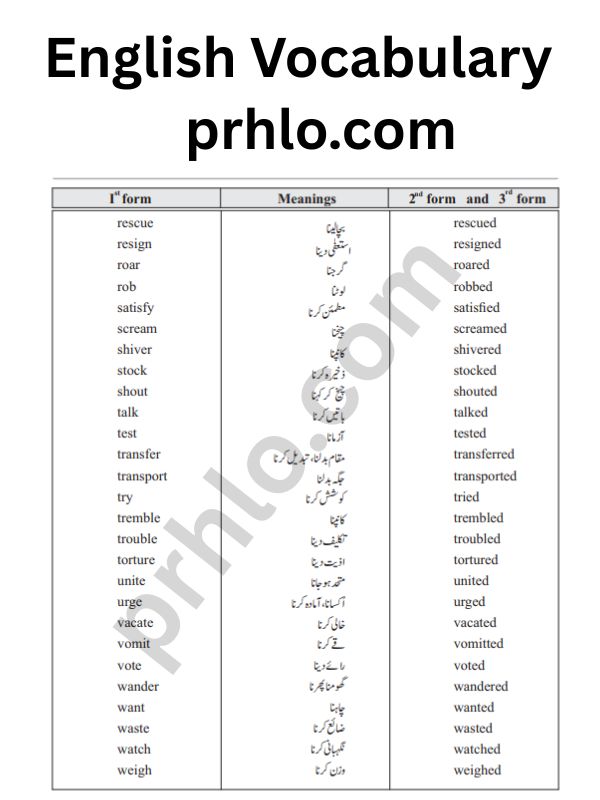
Below are key verbs from the vocabulary sheet — each with its Urdu meaning and regular past forms:
rescue
بچانا
rescued / rescued
resign
استعفی دینا
resigned / resigned
roar
گرجنا
roared / roared
rob
لوٹنا
robbed / robbed
satisfy
مطمئن کرنا
satisfied / satisfied
scream
چیخنا
screamed / screamed
shiver
کانپنا
shivered / shivered
shout
چیخ کرنا
shouted / shouted
transfer
تبادلہ کرنا
transferred / transferred
tremble
کانپنا
trembled / trembled
trouble
تکلیف دینا
troubled / troubled
unite
متحد ہو جانا
united / united
urge
آکسانا / آمادہ کرنا
urged / urged
vacate
خالی کرنا
vacated / vacated
vomit
قے کرنا
vomited / vomited
wander
گھومنا پھرنا
wandered / wandered